
How to Measure Training Effectiveness (Beyond Completion Rates)
Most L&D teams can tell you exactly how many people finished a course. Far fewer can tell you how many people understood it. That gap is why training budgets get cut first in a downturn: completion is easy to report, but it doesn't prove value.
If you want to know how to measure training effectiveness in a way leadership trusts, you need to move from activity metrics to evidence of learning and behavior change.
Why completion rates mislead
A completion record proves someone reached the last slide. It says nothing about whether they could apply the material tomorrow. Worse, it rewards speed-clicking. Programs that report only completion often look healthiest exactly when they're failing.
A four-layer framework for measuring training effectiveness
1. Reaction: did learners find it relevant?
Short pulse surveys still have a place. Ask whether the content applied to the learner's real work, not whether they enjoyed it.
2. Learning: did they actually understand it?
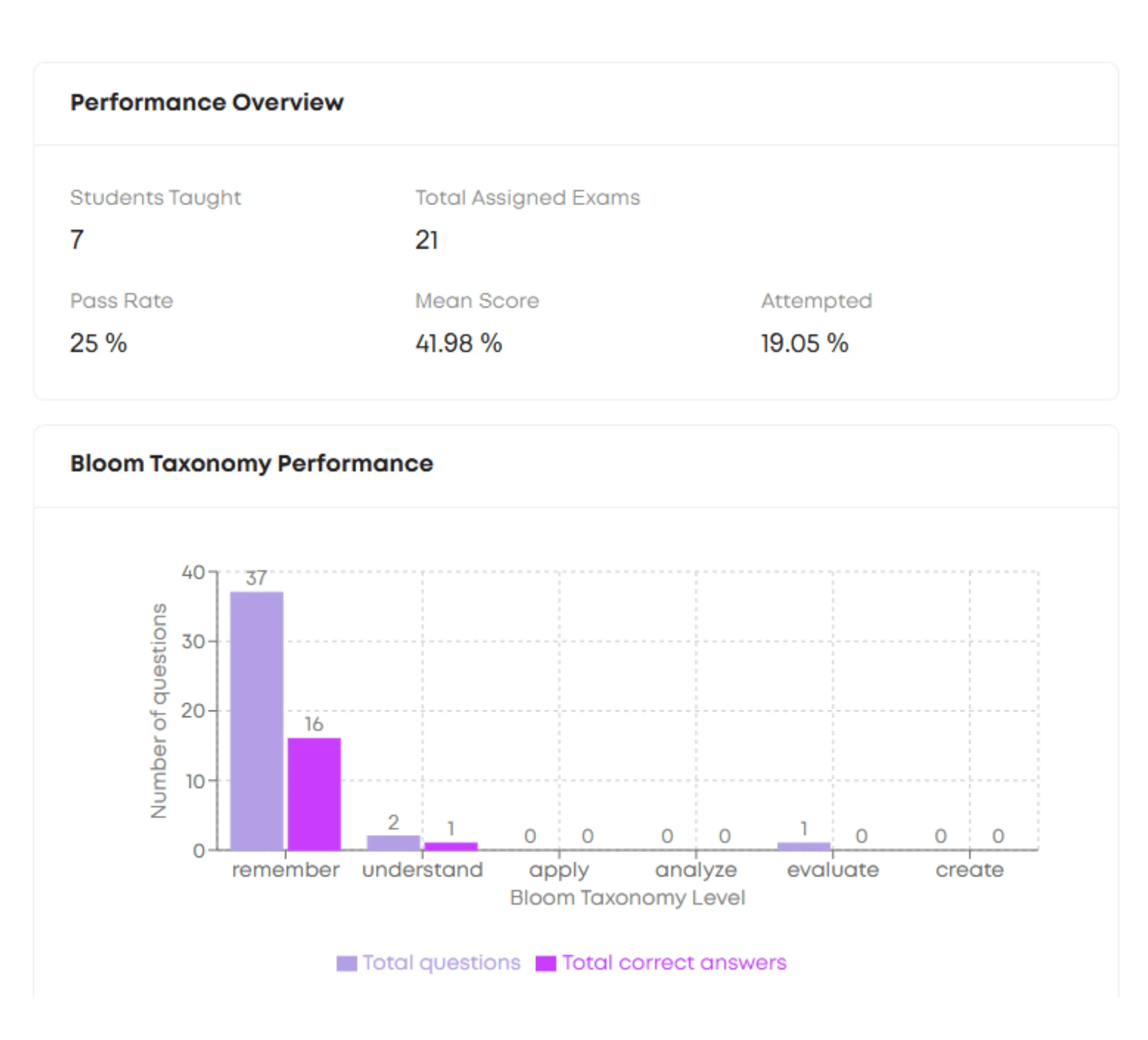
This is where most programs are weakest — and where the biggest gains are. Use assessments that go beyond recall. Questions mapped to Bloom's taxonomy show whether people can apply, analyze and evaluate, not just remember. Pre- and post-tests reveal real gain instead of prior knowledge.
3. Behavior: did their work change?
Link assessment results to on-the-job signals: fewer errors, faster ramp time, fewer escalations, better audit outcomes. Manager check-ins 30 to 90 days after training add qualitative evidence.
4. Results: did the business improve?
Tie programs to the metric they were built to move — incident rates, sales productivity, customer satisfaction, compliance findings. Be honest about attribution; look for consistent direction across cohorts rather than one perfect number.
The training effectiveness metrics that matter
- Comprehension score: verified, proctored results rather than self-assessment.
- Skill-level breakdown: performance by cognitive level and by topic.
- Knowledge gain: pre-test versus post-test change.
- Time to competency: how quickly learners reach a passing standard.
- Retention over time: re-assessment results 60 to 90 days later.
- Skills gap by team: where to focus the next program.
Make measurement automatic
Measurement fails when it's manual. Writing good questions takes time, grading takes longer, and spreadsheets break. Platforms like Quizitive generate assessments from your existing training content, proctor them, score them with psychometric models and roll results into skills-gap dashboards — so evidence is produced every time someone trains.
Start small
Pick one high-stakes program, such as compliance or onboarding. Add a verified assessment, capture a baseline, and report comprehension alongside completion for one quarter. The contrast usually makes the case for you.
Written by
See how skills-first organizations measure what training actually changes.
Download the full report:
Beyond the Job Title — The Rise of the Skills-First Organization
FAQ's
Measure four layers: learner reaction, verified learning through assessments, on-the-job behavior change, and business results. Comprehension scores and skill-level breakdowns are the most actionable evidence.
Completion only proves someone reached the end of a course. It does not show whether they understood the material or can apply it on the job.
Useful metrics include verified comprehension scores, pre- and post-test knowledge gain, time to competency, retention on re-assessment, and skills gaps by team.
The Kirkpatrick model evaluates training at four levels: reaction, learning, behavior and results. Level 2, learning, is typically measured with assessments.
AI can generate assessments from training content, proctor and grade them automatically, and turn results into skills-gap dashboards, so measurement happens every time someone trains.