
Blockchain Certificates: How Verifiable Digital Credentials Work
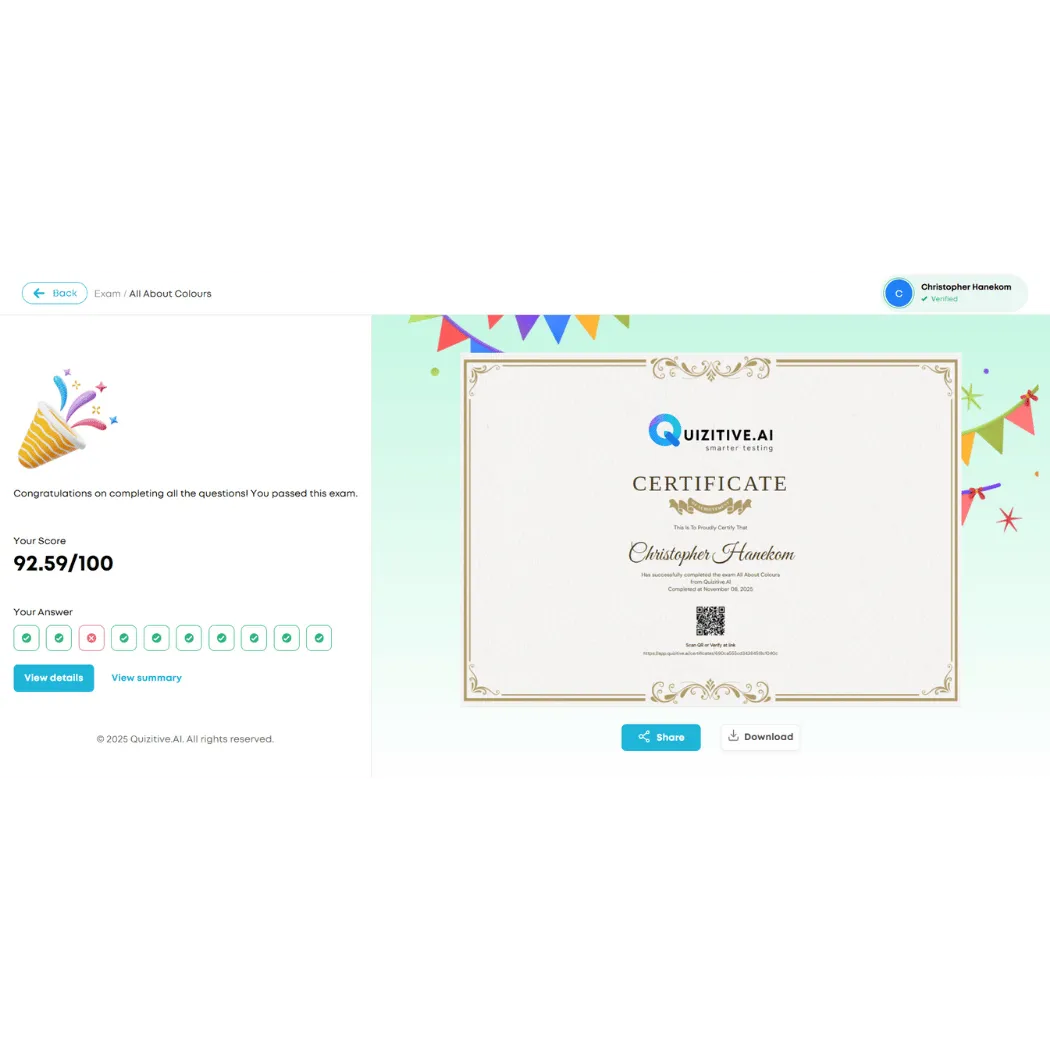
A PDF certificate is easy to edit. Change a name, a date or a score in a few minutes and most employers will never know. That's why verifiable digital credentials — often secured with blockchain — are replacing static certificates in training, certification and hiring.
What is a blockchain certificate?
A blockchain certificate is a digital credential whose unique fingerprint is recorded on a blockchain — a shared ledger that can't be quietly altered or deleted. When someone presents the certificate, anyone can check that fingerprint and confirm the credential is authentic and unchanged.
One clarification that matters: blockchain here has nothing to do with cryptocurrency. It's simply a secure, tamper-evident way to store records.
How verification works
- Issue: when a learner passes, the platform generates a certificate and a unique digital fingerprint of its contents.
- Record: the fingerprint is written to the blockchain with a timestamp.
- Share: the learner shares a link, QR code or PDF — on LinkedIn, by email or in an application.
- Verify: an employer scans the QR code or uploads the certificate. If the fingerprint matches the record, it's confirmed authentic. If anything was changed, the check fails.
Why verifiable credentials matter
- For employers: instant confidence that a credential is real, without emailing the issuer.
- For learners: a portable, permanent proof of achievement they control.
- For issuers: brand protection — no one can forge your certificate.
The certificate is only as good as the exam behind it
A tamper-proof certificate for an easily-gamed test is still meaningless. Credibility depends on what happened before issuance: a proctored assessment, unique questions for each learner, and scoring that measures real ability. Some platforms go further and link the certificate to a verified page showing scores and performance detail, so employers see more than a pass mark.
Where blockchain certificates are used
- Corporate training and compliance certification.
- Professional and continuing education.
- Publisher and author programs — turning books into credentials.
- Pre-employment skills verification.
Quizitive issues blockchain-secured, tamper-proof certificates with QR verification and LinkedIn sharing built in.
Written by
Curious how verified credentials fit a skills-first strategy?
Download the full report:
Beyond the Job Title — The Rise of the Skills-First Organization
FAQ's
A blockchain certificate is a digital credential whose unique fingerprint is recorded on a blockchain, so anyone can verify it is authentic and has not been altered.
No. In this context blockchain is simply a secure, tamper-evident way to store records. It is not related to cryptocurrency.
They scan the certificate's QR code, open its verification link or upload it to the issuer's verification page, which confirms it matches the original record.
Any edit to the certificate changes its fingerprint, so a modified or forged certificate fails verification.
Yes. Verifiable certificates can typically be shared to LinkedIn, by email or as a PDF, while keeping their verification link.